
Top 7 Air-Purifying Indoor Plants for Indian Homes (Names in 5 Languages, Vastu & Health Benefits)
We have all been there 😂. You step out onto your balcony in Mumbai, Delhi, or Bengaluru, take a deep breath, and instantly realize the city air feels like a cocktail of dust, vehicle fumes, and construction smog. Then you walk back inside your living room, stare at a bare corner, and think: "Maybe it's time to bring nature indoors before my lungs start writing a petition!" 🌿
Adding green indoor plants is not just about making your apartment look like a magazine cover. It is about creating a breathable, calming sanctuary. But with hundreds of plants sitting at your local nursery bhaiya's shop, which ones actually clear toxic indoor air, survive Indian weather, and bring good energy according to Vastu Shastra?
Here is your ultimate, no-nonsense guide to the Top 7 Air-Purifying Indoor Plants for Indian Homes—complete with their names in 5 regional Indian languages, historical origins, Vastu directions, and effortless styling hacks!

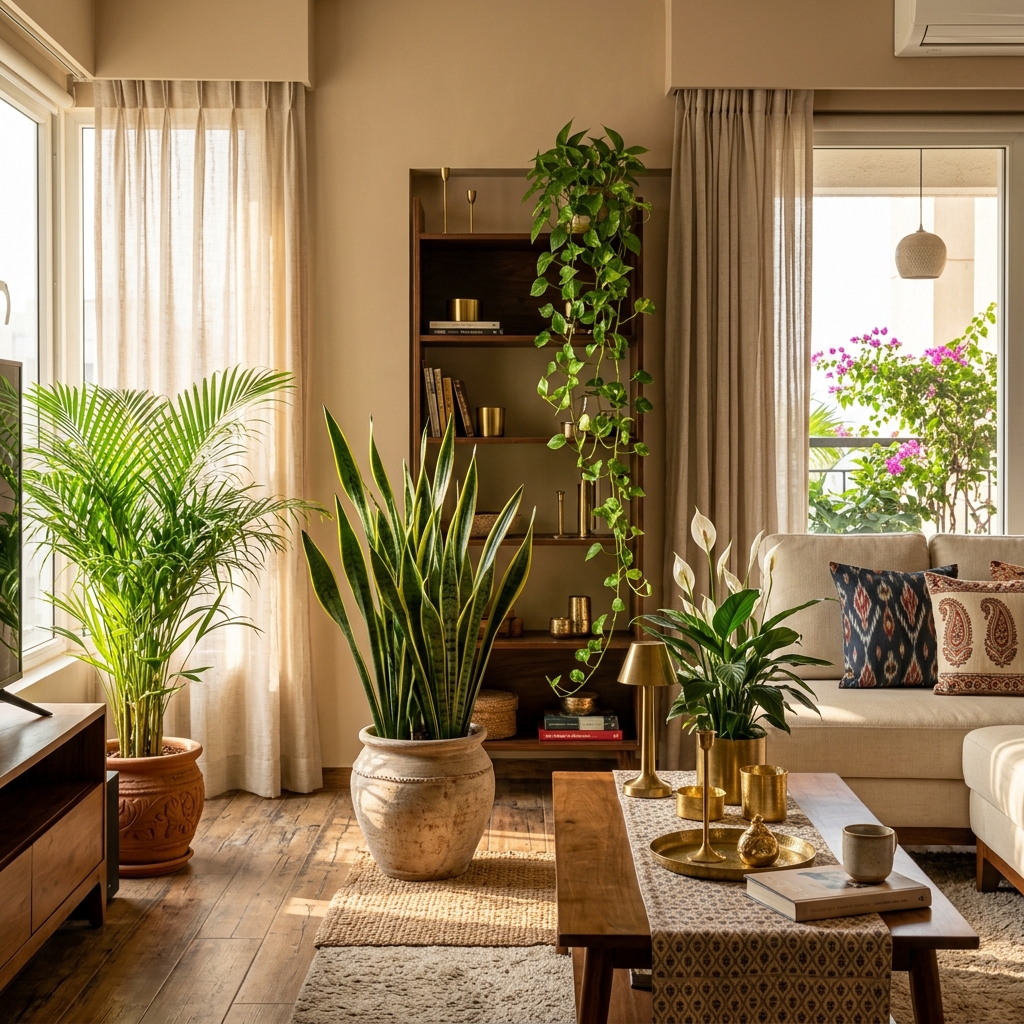
Lush air-purifying indoor plants paired with warm wooden furniture and handcrafted decor accents.
1. Snake Plant (Sansevieria trifasciata) 🐍
🌐 Names in 5 Indian Languages:
- Hindi: नाग फनी पौधा (Naag Phani Paudha) / स्नेक प्लांट
- Marathi: साप रोप (Saap Rop)
- Tamil: பாம்புக் கற்றாழை (Paambu Katrazhai)
- Telugu: పాము మొక్క (Paamu Mokka)
- Bengali: সাপ গাছ (Saap Gaach)
History & Origin: Native to the tropical forests of West Africa (from Nigeria to Congo), the Snake Plant was historically cultivated for its extremely tough leaf fibers, used to craft bowstrings and ropes.
NASA Air Purification Fact: The Snake Plant is one of the very few plants that converts Carbon Dioxide (CO2) into pure Oxygen at night! According to NASA's Clean Air Study, it actively removes Benzene, Formaldehyde, Xylene, and Toluene from indoor air.
Vastu Shastra Placement: Place it in the South, South-East, or East corners of your living room or bedroom. Avoid putting it directly between your bed and main entrance door.
Styling Hack: Put it in a tall, textured terracotta or matte ceramic pot beside your sofa or TV unit. It requires watering only once every 10-14 days!
2. Money Plant / Devil's Ivy (Epipremnum aureum) 💰
🌐 Names in 5 Indian Languages:
- Hindi: मनी प्लांट / कुबेराक्षी (Kuberakshi)
- Marathi: पैशांचे झाड (Paishanche Jhaad)
- Tamil: பணம் செடி (Panam Cedi)
- Telugu: మనీ ప్లాంట్ (Money Plant)
- Bengali: টাকার গাছ (Takar Gaach)
History & Origin: Native to Mo'orea in French Polynesia, this heart-leaved trailing vine earned the nickname "Devil's Ivy" because it is almost impossible to kill and stays green even in near-total darkness.
NASA Air Purification Fact: Money Plant is a master at filtering synthetic chemicals released by synthetic carpets, paint, and wooden furniture coatings.
Vastu Shastra Placement: Always place Money Plant in the South-East direction (ruled by Lord Ganesha and Planet Venus) to attract financial prosperity and harmony. Never place it in the North-East direction.
Styling Hack: Let its heart-shaped vines cascade gracefully down floating wooden wall ledges or train them around a handcrafted resin wall frame.
3. Peace Lily (Spathiphyllum) 🕊️
🌐 Names in 5 Indian Languages:
- Hindi: पीस लिली / शांति पौधा (Shanti Paudha)
- Marathi: शांतता लिली (Shantata Lily)
- Tamil: அமைதி லீலி (Amaidhi Lily)
- Telugu: ప్రశాంతత లిల్లీ (Prashantata Lily)
- Bengali: শান্তি লিলি (Shanti Lily)
History & Origin: Native to the tropical rainforests of Central and South America, where it grows underneath dense jungle canopies in humid shade.
NASA Air Purification Fact: Peace Lily ranks in NASA's top 3 all-time air purifiers! It breaks down all 5 major airborne pollutants: Ammonia, Formaldehyde, Benzene, Trichloroethylene, and Xylene.
Vastu Shastra Placement: Place in the North or East direction to foster peace, emotional healing, and mental clarity inside bedrooms and study areas.
Styling Hack: Looks striking in a white porcelain or polished brass planter set on a low coffee table or entryway console.
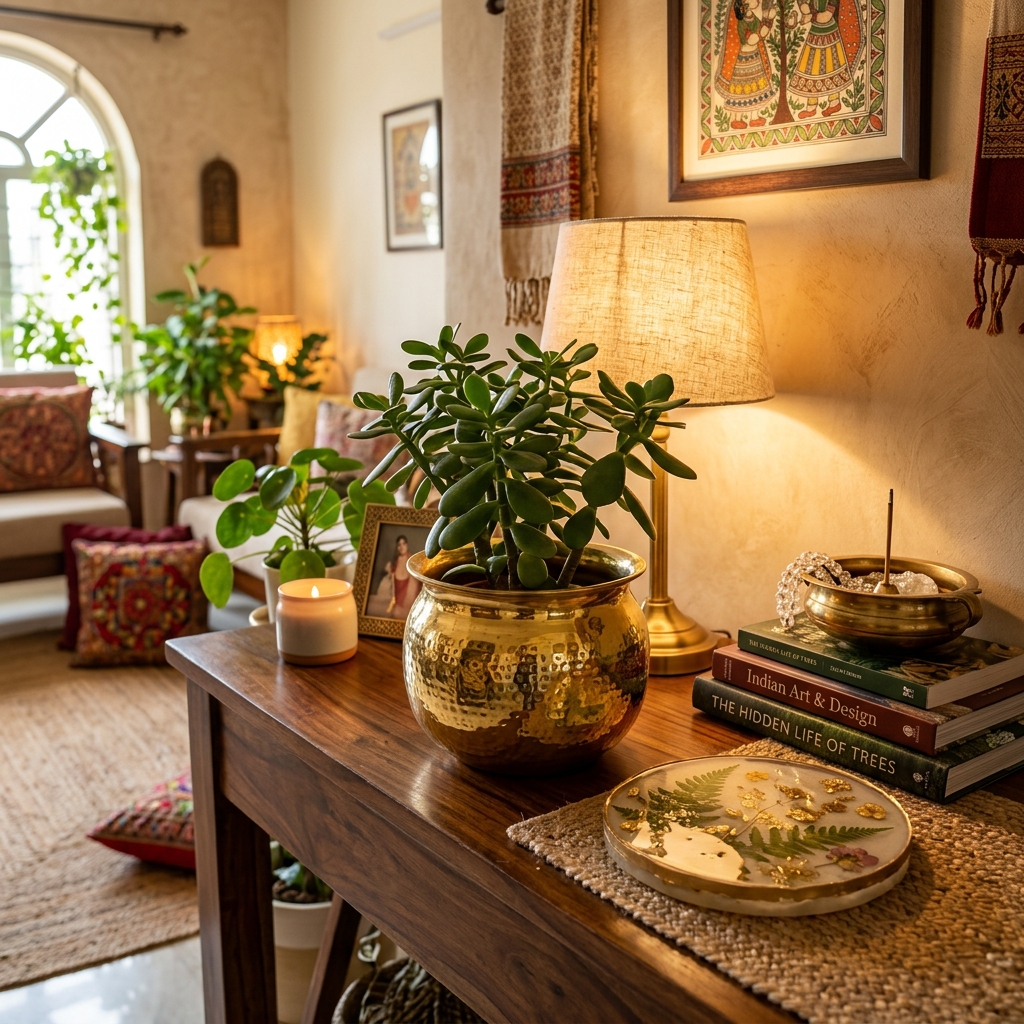
Aesthetic indoor plant styling on an entryway console paired with handcrafted resin floral coasters.
4. Jade Plant (Crassula ovata) 🪴
🌐 Names in 5 Indian Languages:
- Hindi: जेड प्लांट / कुबेर पौधा (Kuber Paudha)
- Marathi: जेड रोप (Jade Rop)
- Tamil: ஜேட் செடி (Jade Cedi)
- Telugu: జేడ్ మొక్క (Jade Mokka)
- Bengali: জেড গাছ (Jade Gaach)
History & Origin: Originating in the dry rocky hills of South Africa and Mozambique, the Jade Plant features thick, jade-green oval leaves that store water like mini reservoirs.
Health Benefits: As a succulent, Jade Plant releases moisture into dry air, helping alleviate dry skin and throat irritation caused by continuous air conditioning during Indian summers.
Vastu & Feng Shui Placement: Known as the "Money Magnet", place Jade Plant at your main entrance door console table facing East or North to invite good fortune and wealth.
5. Areca Palm (Dypsis lutescens) 🌴
🌐 Names in 5 Indian Languages:
- Hindi: अरेका पाम / छोटी सुपारी (Chhoti Supari Paudha)
- Marathi: सुपारी पाम (Supari Paam)
- Tamil: பாக்கு பனை (Paakku Panai)
- Telugu: పోక చెట్టు (Poka Chettu)
- Bengali: সুপারি পাম (Supari Paam)
History & Origin: Native to the island of Madagascar, the Areca Palm is widely loved across Indian tropical architecture for its feathery green fronds.
NASA Air Purification Fact: Areca Palm is rated by NASA as one of the best natural air humidifiers in existence, pumping up to 1 liter of moisture into indoor air every 24 hours while filtering toxins.
Vastu Placement: Position in the South-East or South corner of your living room to boost positive energy and vital warmth.
6. Rubber Plant (Ficus elastica) 🍃
🌐 Names in 5 Indian Languages:
- Hindi: रबर प्लांट (Rubber Plant)
- Marathi: रबर झाड (Rubber Jhaad)
- Tamil: ரப்பர் செடி (Rubber Cedi)
- Telugu: రబ్బరు మొక్క (Rabbaru Mokka)
- Bengali: রবার গাছ (Robar Gaach)
History & Origin: Native right here to Northeast India (Assam) and Southeast Asia! In Meghalaya, rubber tree roots were historically trained by villagers to grow into living root bridges.
Air Purification Benefit: Its large, glossy leather-like leaves absorb airborne dust particles and heavy chemical toxins like Formaldehyde.
Vastu Placement: South-East direction of living rooms. Avoid placing in bedrooms.
7. Spider Plant (Chlorophytum comosum) 🕷️
🌐 Names in 5 Indian Languages:
- Hindi: स्पाइडर प्लांट / मकड़ी पौधा (Makdi Paudha)
- Marathi: कोळी रोप (Koli Rop)
- Tamil: சிலந்தி செடி (Cilanthi Cedi)
- Telugu: సాలీడు మొక్క (Saleedu Mokka)
- Bengali: মাকড়সা গাছ (Makadsa Gaach)
History & Origin: Native to tropical and southern Africa. Introduced to European and Asian indoor gardens during the 19th century.
Health Benefit & Pet Safety: 100% non-toxic to cats and dogs! Removes 90% of airborne Carbon Monoxide and Formaldehyde within 24 hours.
Vastu Placement: North, East, or North-West corners of dining rooms or study spaces.
✨ Summary Takeaways: Your Indoor Plant Starter Kit
- Bedroom Night Air: Snake Plant & Peace Lily (Oxygen release at night).
- Wealth & Entrance Vastu: Jade Plant & Money Plant (East/South-East).
- Living Room Corners: Areca Palm & Rubber Plant (Humidity + Statement Look).
- Pet Safe: Spider Plant & Areca Palm.
Pair Your Green Sanctuary with Artisan Handcrafted Decor! 🎨
Enhance your indoor jungle with NAQSH DECORS handcrafted resin coasters, botanical floral preservation frames, and luxury wall art pieces designed for modern Indian homes.