
DIY Terrarium & Mini Glass Garden Decor Ideas for Living Room Tables 🌿🔮
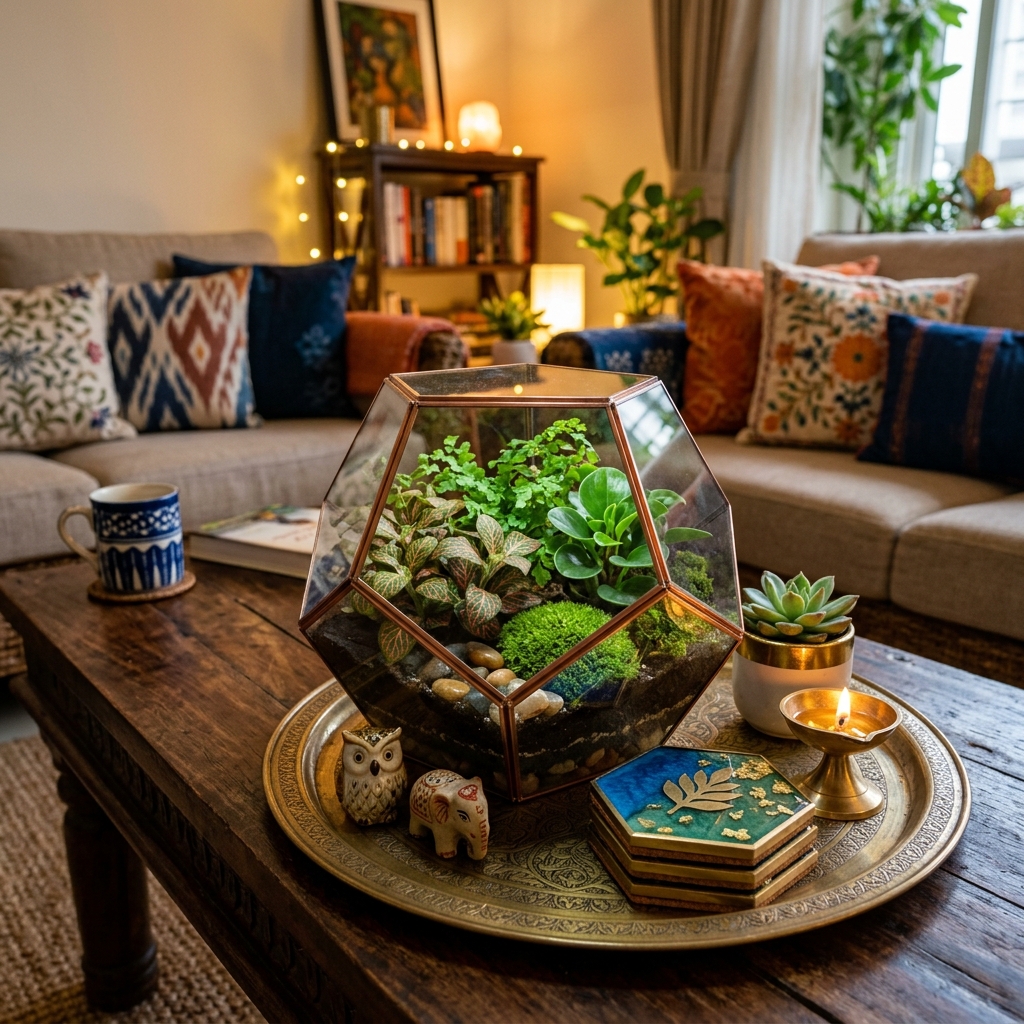
We've all suffered from 'Boring Coffee Table Syndrome' at some point 😂. You invest in a gorgeous teak wood or marble coffee table for your living room, only for it to slowly turn into a dumping zone for TV remotes, half-empty water bottles, car keys, and yesterday's newspaper! Then relatives or friends drop by for afternoon chai ☕, sit on your sofa, and stare down at your blank table like it forgot to perform its job!
Plastic faux flowers look tacky after two weeks, and regular potted plants can leak muddy water onto your polished wood table if someone accidentally overwaters them. So what is the ultimate centerpiece solution that combines lush living greenery, zero mess, and pure artistic elegance?
Enter the magical world of DIY Glass Terrariums & Mini Glass Gardens! 🌿🔮 A miniature indoor forest trapped inside clear glass, complete with layered pebbles, velvety green moss, pops of pink foliage, and glowing fairy lights. It is part science project, part living artwork, and 100% guaranteed to be the biggest conversation starter in your home.
In this complete DIY guide, you'll learn how to build your own glass garden step-by-step, choose the right plants (with names in 5 Indian languages!), balance open vs closed jars, master Vastu placement, and style your coffee table like a pro interior decorator!

A handcrafted geometric glass terrarium creates a mesmerizing living centerpiece on any living room table.
📜 The Unexpected Origin Story of Terrariums: Dr. Ward's 1829 Accident 🧪
Believe it or not, the glass terrarium was invented completely by accident back in 1829 by a London physician named Dr. Nathaniel Bagshaw Ward! He was trying to observe a moth pupa inside a sealed glass jar with damp soil. To his surprise, a tiny fern spore and a blade of grass germinated inside the sealed jar and kept growing for four whole years without a single drop of added water!
Dr. Ward realized that water evaporated from the soil, condensed on the inner glass walls during cold nights, and dripped back down like artificial rain—creating a self-sustaining miniature rain cycle! This invention (called the 'Wardian Case') allowed botanists in the 19th century to safely ship exotic orchids, ferns, and tea plants across salty oceans to gardens in Kolkata, Mumbai, and London.
Today, bringing a glass terrarium into your living room connects your modern decor with nearly two centuries of botanical history! 🌿✨
🔬 Open Terrarium vs Closed Terrarium: Which One is Right for You?
Before you buy your glass container, you must understand the golden rule of terrarium building: open jars and closed jars require completely different plant families!
💧 Closed Glass Terrarium
Best For: Tropical, high-humidity, moisture-loving plants (Ferns, Fittonia, Moss, Moss-rose, Peperomia).
How it Works: Sealed with a cork or glass lid. Traps moisture and recirculates condensation. Requires watering only once every 2 to 3 months!
✨ Perfect for busy plant lovers who forget watering schedules.
☀️ Open Glass Terrarium
Best For: Arid, sun-loving, low-water plants (Succulents, Echeveria, Haworthia, Jade Plant, Cacti).
How it Works: Open top allows fresh airflow and rapid evaporation so root rot doesn't occur. Light misting every 10 to 14 days.
✨ Great for bright living rooms with direct window sunlight.
🏗️ The 5 Essential Layers of a Healthy Glass Terrarium
Because glass containers don't have bottom drainage holes, building a proper layering foundation is critical. If roots sit directly in stagnant water, they will rot in a week! Here is the exact 5-layer sandwich formula to build:
- Layer 1 — Drainage Gravel Base (1 to 1.5 inches): Fill the bottom with small pebbles, gravel, or aquarium stones. This creates a false bottom reservoir where excess water can settle safely away from plant roots.
- Layer 2 — Activated Charcoal Filter (0.5 inch): Sprinkle a thin layer of horticultural activated charcoal over the stones. Charcoal absorbs stale odors, prevents mold, and filters toxins out of recirculated water.
- Layer 3 — Sphagnum Moss Barrier: Place a thin sheet of dried sphagnum moss or fine mesh net over the charcoal. This prevents potting soil from washing down into your clean pebble layer!
- Layer 4 — Well-Draining Soil Mix (2 to 3 inches): For closed terrariums, use light coco-peat peat moss blend. For open succulent terrariums, mix 50% coarse sand with cacti soil mix.
- Layer 5 — Plants & Decorative Elements: Plant your miniature greenery, cover bare soil with vibrant green sheet moss, and add polished white river stones or tiny resin figurines!
🪴 Top 5 Terrarium Plants (Names in 5 Indian Languages)
Here are 5 compact, slow-growing plants that look stunning in glass gardens, along with local names, historical origin, Vastu advice, and styling hacks!
1. Fittonia (Nerve Plant) — The Star of Closed Terrariums 🎨
🌐 Names in 5 Indian Languages:
- Hindi: फ़िटोनिया नर्व प्लांट (Fittonia Nerve Plant)
- Marathi: फिटोनिया रोप (Fittonia Rop)
- Tamil: ஃபிட்டோனியா செடி (Fittonia Sedi)
- Telugu: ఫిటోనియా మొక్క (Fittonia Mokka)
- Bengali: ফিটোনিয়া গাছ (Fittonia Gach)
History & Origin: Native to the humid rainforest understory of Peru and Colombia, Fittonia gets its name from 19th-century botanical authors Elizabeth and Sarah Fitton. It loves high humidity and indirect light.
Vastu & Benefits: Fittonia's vibrant pink, red, or silver leaf veins bring joyful color and positive energy. Vastu recommends placing Fittonia terrariums in the East or North-East sector of living rooms to promote vibrant communication.
Decor Hack: Pair bright pink Fittonia with dark green cushion moss in a round apothecary glass jar for maximum color contrast.
2. Echeveria (Succulent Rose) — The Geometric Queen 🌹
🌐 Names in 5 Indian Languages:
- Hindi: सकुलेंट / एचेवेरिया (Succulent / Echeveria)
- Marathi: सकुलेंट रोप (Succulent Rop)
- Tamil: சக்குலண்ட் செடி (Succulent Sedi)
- Telugu: సక్యులెంట్ మొక్క (Succulent Mokka)
- Bengali: সাকুলেন্ট গাছ (Succulent Gach)
History & Origin: Named after 18th-century Mexican botanical illustrator Atanasio Echeverría y Godoy, these rosette succulents originate from the semi-arid mountain cliffs of Mexico.
Vastu & Benefits: Rosette succulents symbolize endurance, protection, and stability. Place open succulent terrariums in the South-East or South section of your table to invite grounded prosperity.
Decor Hack: Plant Echeveria in open geometric brass or copper glass pyramids surrounded by light gray pebbles and crushed white quartz.
3. Peperomia Watermelon — The Compact Leaf Marvel 🍉
🌐 Names in 5 Indian Languages:
- Hindi: पेपेरोमिया (Peperomia)
- Marathi: पेपेरोमिया रोप (Peperomia Rop)
- Tamil: பெப்பரோமியா செடி (Peperomia Sedi)
- Telugu: పెపెరోమియా మొక్క (Peperomia Mokka)
- Bengali: পেপেরোমিয়া গাছ (Peperomia Gach)
History & Origin: Hailing from tropical South America, Peperomia leaves feature distinct dark green and silver stripes resembling miniature watermelons!
Vastu & Benefits: Compact Peperomia varieties stay tiny for years without outgrowing their glass home. Vastu associates rounded, fleshy leaves with harmony and stress reduction.
Decor Hack: Use single watermelon Peperomia stems as focal points in medium-sized glass fishbowls on coffee table books.
4. Cushion Moss & Sheet Moss — Nature's Velvet Carpet 🟩
🌐 Names in 5 Indian Languages:
- Hindi: मॉस घास (Moss Ghas)
- Marathi: मॉस शेवाळ (Moss Shewal)
- Tamil: பாசி செடி (Paasi Sedi)
- Telugu: మోస్ పాచి (Moss Paachi)
- Bengali: মসি শ্যাওলা (Mosi Shaola)
History & Origin: Mosses are among the oldest land plants on Earth, thriving for over 450 million years without true roots, absorbing humidity directly through green cell walls.
Vastu & Benefits: Moss acts as a natural humidity meter inside closed glass. Lush green moss brings soothing forest vibes and balances the wood-water element according to Vastu.
Decor Hack: Press preserved or live moss into soil contours around tiny miniature ceramic pagodas, wooden twigs, or crystal stones.
5. Mini Syngonium (Arrowhead Plant) — Lush Tropical Spire 🍃
🌐 Names in 5 Indian Languages:
- Hindi: सिंगोनियम (Syngonium)
- Marathi: सिंगोनियम रोप (Syngonium Rop)
- Tamil: சிங்கோனியம் செடி (Syngonium Sedi)
- Telugu: సింగోనియం మొక్క (Syngonium Mokka)
- Bengali: সিংগোনিয়াম গাছ (Syngonium Gach)
History & Origin: Native to tropical rain forests from Mexico to South America, mini arrow-head varieties add vertical height and lush tropical feel.
Vastu & Benefits: Syngonium's five-lobed leaves represent the five natural elements (Water, Fire, Earth, Wood, Metal) in perfect balance. Place in North or East zones.
Decor Hack: Position dwarf Syngonium at the back of tall glass cylinders to create depth and dramatic height levels.
☕ Pro Coffee Table Styling Hacks for Indian Homes
Once your DIY terrarium is built, don't just dump it randomly in the middle of your table! Follow these professional interior styling rules to make it look like a cover photo from an architecture magazine:
- The Rule of Threes (Tray Layering): Place your glass terrarium on a polished brass tray or hand-carved wooden tray alongside a stack of 2 art books and a set of artisan resin coasters. Grouping items in threes creates visual rhythm!
- Add Warm Glow with Fairy Lights 🕯️✨: Coil copper battery-powered LED fairy lights around the outer base of your glass terrarium or tuck waterproof micro-lights inside the glass. At night, it transforms your living room into an enchanted ambient haven.
- Pair with NAQSH Handcrafted Decor 🎨: Balance the organic green glass garden with gold-leaf resin coasters, handcrafted Lippan art panels on the adjacent wall, or marble tea-light holders.
- Keep Away from Direct Midday Sun ☀️: Glass acts like a magnifying lens! Placing a closed terrarium under harsh direct afternoon sunlight will overheat the internal air and bake your delicate plants. Keep in bright, indirect room light.
✨ Quick Summary Takeaways: DIY Terrarium Styling
- Closed vs Open: Closed jars for high-humidity tropical plants (Fittonia, Moss, Ferns); Open jars for succulents & cacti.
- 5 Layer Formula: Gravel Base → Activated Charcoal → Moss Barrier → Soil Mix → Plants & Pebbles.
- Vastu Placement: Place on living room coffee tables in North-East or East for positive energy.
- Maintenance: Closed terrariums only need water once every 2-3 months; keep away from direct scorching sunlight!
Complete Your Living Room Table Sanctuary! 🎨
Style your new glass terrarium alongside NAQSH DECORS handcrafted resin coasters, brass accent trays, and signature Lippan wall art masterpieces!