
Platform Risk: Why Relying Solely on Third-Party Bio Link Platforms Is Costing You Leads 🛡️📉🔑

Imagine waking up on a busy Tuesday morning ready to launch your biggest consulting cohort, creative agency package, or digital product drop. You drafted announcement posts across LinkedIn, X (Twitter), Instagram, and YouTube. You conclude every single post with the classic call-to-action: "Click the link in my bio to reserve your spot before seats close."
Twenty minutes later, direct messages start buzzing: "Hey, your link says 502 Bad Gateway!", "Is your site down? Instagram is warning me that this link might be unsafe," and "The page is completely white on my phone."
You open your browser and discover that your centralized third-party bio link platform is suffering a worldwide cloud outage. Even worse, because major social apps enforce strict API rate limits and manual profile editing barriers, you cannot immediately change the link across all your profiles. Over the next four hours of peak launch traffic, hundreds of high-intent clients bounce off a dead error page, evaporating thousands of dollars in potential revenue.
This scenario is not an isolated bad-luck incident. It represents what software architects and enterprise strategists term "Platform Risk"—the existential vulnerability of building your primary business funnel on rented digital land. When you funnel all your public inbound traffic through a centralized middleman SaaS, you relinquish control over your site reliability, analytics accuracy, search engine authority, and direct client relationships.
In this guide, we examine why relying on shared third-party bio platforms quietly erodes your profit margins, how to establish genuine Digital Sovereignty through custom-routed infrastructure, and why pairing your web presence with an offline phygital anchor (like a NAQSH Decors Smart Keychain) builds an unbreakable direct pipeline to your clients.

Digital Sovereignty in practice: An agency founder managing owned DNS routing alongside an everyday carry artisan smart keychain.
The 4 Hidden Traps of Rented Bio Link Platforms ⚠️
Most creators and professionals sign up for a trendy bio-tree tool because setting up a basic page takes three minutes. However, the convenience comes with hidden structural compromises that systematically undermine your business:
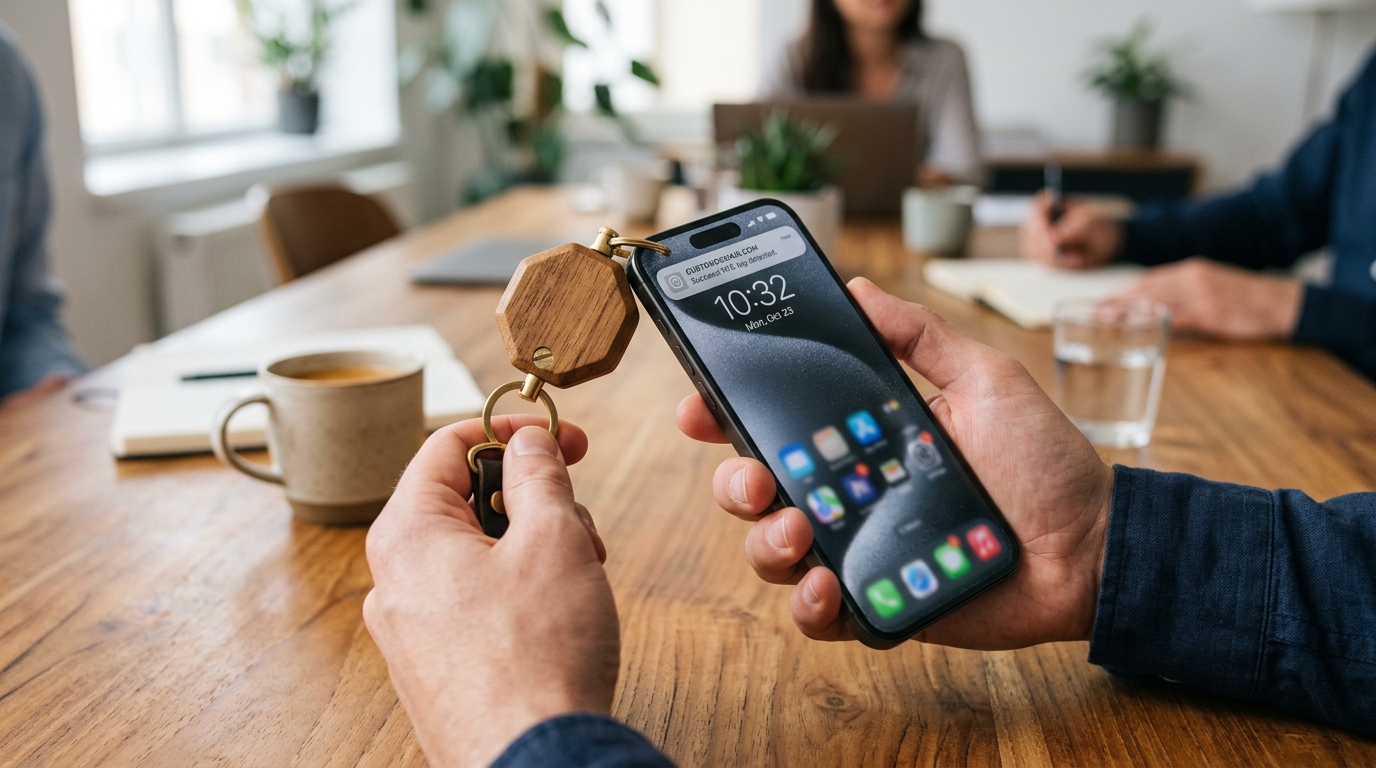
Physical-to-Digital Autonomy: Direct contactless interaction that routes prospects straight to owned brand channels without intermediary redirects.
🕳️ 1. Traffic Cannibalization & Hidden Ad Pixels
Free and entry-tier bio tools inject third-party ad retargeting pixels onto your landing page. They track your audience's browsing patterns to power their own ad networks, retarget your visitors with competing software offers, and plaster prominent promotional footers ("Create your own page with us") directly beneath your high-ticket booking buttons. You are paying with your visitors' attention.
⚡ 2. Shared Domain Collateral Damage
Because centralized platforms host millions of free accounts under a single root domain (e.g., linktr.ee/username), they constantly attract spammers, affiliate scammers, and policy violators. When automated spam filters on Instagram, Meta, or TikTok trigger against bad actors, they frequently flag or blacklist the entire root domain. Your legitimate brand link gets blocked without warning, cutting off your traffic overnight.
💸 3. The Perpetual Monthly SaaS Tax
To remove ugly third-party watermarks, use your brand's official typography, view raw visitor logs, or connect your own domain, these platforms demand monthly recurring fees between 0 and 5 per month (20 to 00 annually). You end up paying a continuous software tax for basic features that modern edge architecture provides for pennies.
📉 4. The SEO Backlink Equity Drain
Every time you place a bio link on high-traffic social platforms, press mentions, or guest articles, search engine crawlers interpret that URL as an authoritative backlink vote. When that link points to a third-party domain, you are directly boosting the venture-backed startup's Google domain rating while leaving your own business website starved of organic search equity.
Redirect Latency: The Invisible Conversion Killer ⏱️
There is another subtle reason why rented bio links depress sales: HTTP redirect latency.
When a potential buyer clicks a third-party bio link in an in-app mobile browser (like Instagram's internal WebKit view), the phone executes multiple network hops:
- Hop 1: The social network routes the click through its internal tracking gateway (e.g.,
l.instagram.com). - Hop 2: The request reaches the third-party bio link server, which queries its database and issues a 301/302 redirect.
- Hop 3: The bio service renders a bloated JavaScript bundle loaded with third-party tracking scripts, consent banners, and widgets.
- Hop 4: When the user finally taps your checkout or WhatsApp link, another redirect cycle occurs.
On real-world mobile 4G/5G connections, these network hops add 800ms to 1,600ms of lag before the visitor sees your offerings. Google and Amazon performance studies have proven that every 500ms of mobile loading delay cuts conversion rates by up to 20%. By hosting on your own sovereign, lightweight architecture, your page loads in under 100ms, preserving user intent at the critical moment of interest.
Rented Bio Platform vs Sovereign Phygital Infrastructure 📊
Here is a detailed comparison of running your inbound brand presence on a generic third-party SaaS versus an owned domain paired with a NAQSH Decors Smart Keychain:
| Feature & Reliability Metric | Generic Rented Bio SaaS | NAQSH Decors Sovereign Phygital Setup |
|---|---|---|
| Domain Ownership & SEO | Subdomain of third party (e.g., linktr.ee/brand) | Owned domain / custom subdomain (you keep 100% SEO equity) |
| Risk of Social Blacklisting | High (frequently flagged due to bad actors on shared host) | Near Zero (clean dedicated domain history) |
| Visitor Tracking & Data Privacy | Platform harvests data for advertising & retargeting | 100% private (clean telemetry, zero competitor pixels) |
| Mobile Loading Speed | 1,200ms - 2,200ms (heavy tracking script bundles) | < 120ms (lightweight server-rendered edge delivery) |
| Physical Offline Connectivity | None (strictly digital browser link) | Tactile NFC Keychain (instant physical contact sharing) |
| Direct Action Conversions | Distracting buttons & platform branding | Direct 1-tap WhatsApp chat & native vCard phone save |
| Annual Ongoing Cost | 20 - 00/year perpetual subscription | One-time artisan hardware purchase + free cloud control |
Why Physical Hardware Anchors Digital Sovereignty 🔑
Online platforms come and go. Instagram reach fluctuates with algorithmic shifts. Ad accounts get mistakenly paused. Accounts occasionally face lockouts or two-factor authentication issues. If your entire client generation pipeline depends entirely on a digital URL inside an app, your business remains fragile.
A NAQSH Decors Smart Keychain acts as an unshakeable offline anchor. It grounds your professional identity in the physical world. When you attend an industry convention, client lunch, or spontaneous coffee meetup:
- Zero App Dependency: You do not need to pull open an app or search for a QR code on a dim phone screen. Simply bring your wooden keychain near your prospect's smartphone.
- Permanent Dynamic Routing: If you change agencies, update your company domain, or launch a new portfolio next year, you never need to replace the keychain. Update the destination URL in your central dashboard once, and every tap automatically routes to your new digital home.
- Unforgettable First Impression: Handcrafted from natural seasoned teakwood with laser-etched precision, the physical weight and tactile warmth of artisan hardware immediately signals craftsmanship, seriousness, and premium positioning.
Two Real-World Case Studies: Rented Platform vs Sovereign Ownership 📖
In late 2025, an independent digital design agency based in Bangalore was invited to pitch a major corporate rebranding project. During the annual industry leadership summit in Mumbai, the agency founder met the enterprise Chief Marketing Officer in person. When the CMO asked to review the agency's recent case studies, the founder instructed them to tap the bio link listed on their Instagram and LinkedIn pages.
Unfortunately, the third-party bio hosting service was undergoing an unannounced database migration. The page hung on an endless spinner before throwing a 504 Gateway Timeout error. In a fast-moving executive environment with dozens of competing agencies vying for attention, the moment evaporated. The CMO moved to the next meeting. That single technical hiccup on a rented third-party tool cost the agency an estimated ₹11.5 Lakh (4,000) contract.
Contrast that with a fractional Chief Technology Officer advising fast-growing tech startups. Frustrated by paying 40 annually for a generic link platform while watching visitor analytics show high bounce rates, she migrated to a dedicated sovereign profile hosted on her own domain (connect.hername.com).
She paired this with a handcrafted NAQSH Decors Teakwood Smart Keychain. When networking at tech meetups and angel investor dinners, she tapped her keychain to prospective clients' phones. Her page loaded in 85 milliseconds, directly presented an instant vCard contact download, and featured a one-tap calendar booking link. Within four months, her inbound meeting completion rate jumped by 42%, and her personal domain gained enough organic authority to rank on page one of Google for high-intent fractional leadership search terms.
The 4-Step Sovereignty Audit: Reclaiming Your Brand Today 📋
Protect your inbound business funnel with this actionable four-step audit:
Step 1: Point Your Social Profiles to Your Own Domain
Stop linking to third-party domains. Configure a dedicated branded subdomain or custom path on your website (such as links.yourbrand.com or yourbrand.com/connect). This guarantees every click builds your domain authority and preserves your SEO ranking power.
Step 2: Strip Third-Party Tracking Bloat
Audit your landing page for unneeded analytics scripts, cookie banners, and ad pixels. Clean HTML and server-rendered components allow mobile visitors on spotty cellular networks to interact with your offerings without stutter or lag.
Step 3: Enable 1-Tap Direct Conversions
Replace friction-heavy multi-field contact forms with instant direct channels: a prominent WhatsApp button configured with a pre-populated greeting, an instant vCard contact download that saves directly into their phone address book, and a direct calendar link for qualified consultations.
Step 4: Equip Yourself with an Everyday Carry Smart Keychain
Carry your primary sovereign link on your keys. Whether you are boarding a plane, having coffee with an investor, or attending an industry summit, you can exchange verified contact info instantly without fumbling with paper cards or typing names into search bars.
Frequently Asked Questions (FAQ) ❓
1. Can Instagram or LinkedIn actually block a generic bio link domain?
Yes, repeatedly. Major social networks use automated domain reputation systems. Because thousands of spammers create free accounts on popular bio link SaaS platforms daily, these root domains occasionally trip spam thresholds, resulting in temporary blanket bans that prevent users from opening links across entire networks.
2. How does using my own domain improve my Google search ranking?
When you publish links on your social media profiles, directory listings, and event bios, search engine web crawlers follow those links and register them as inbound trust signals. If those signals point to your own domain name, your domain authority increases over time, helping your services rank higher in organic Google search results.
3. Do I need technical programming skills to host my own sovereign bio page?
No technical coding is required. Modern platforms allow you to create clean, responsive bio profiles in minutes with simple point-and-click customization. You can connect your custom domain name with simple DNS records provided by your registrar.
4. Do free bio link providers monetize my visitor traffic?
Most free-tier services monetize via data collection and third-party advertising cookies. By tracking the browsing habits of your incoming traffic, they build user profiles for programmatic advertising. Moving to an owned, private page ensures your client relationships remain completely confidential.
5. What happens if I update my website or phone number later?
Your physical Smart Keychain never becomes obsolete. It connects to an intelligent cloud redirect endpoint. When you change your phone number, social handles, or website destination, you update your settings online, and every keychain in the field immediately routes to your updated profile.
📋 Summary Takeaways: Securing Your Digital Future
- Avoid Rented Land: Protect your brand against sudden domain blacklists and platform outages.
- Capture Backlink Equity: Funnel all high-authority social media links into your own domain.
- Cut Inbound Latency: Eliminate redirect hops so mobile visitors load your offers in under 120ms.
- Anchor With Hardware: Carry an artisan NAQSH Decors Smart Keychain for 100% dependable real-world networking.
Take Full Ownership of Your Digital Identity Today 🛡️🔑✨
Protect your brand from third-party platform vulnerabilities. Combine a sovereign, high-speed bio presence with an artisan handcrafted NAQSH Decors Smart Keychain.